
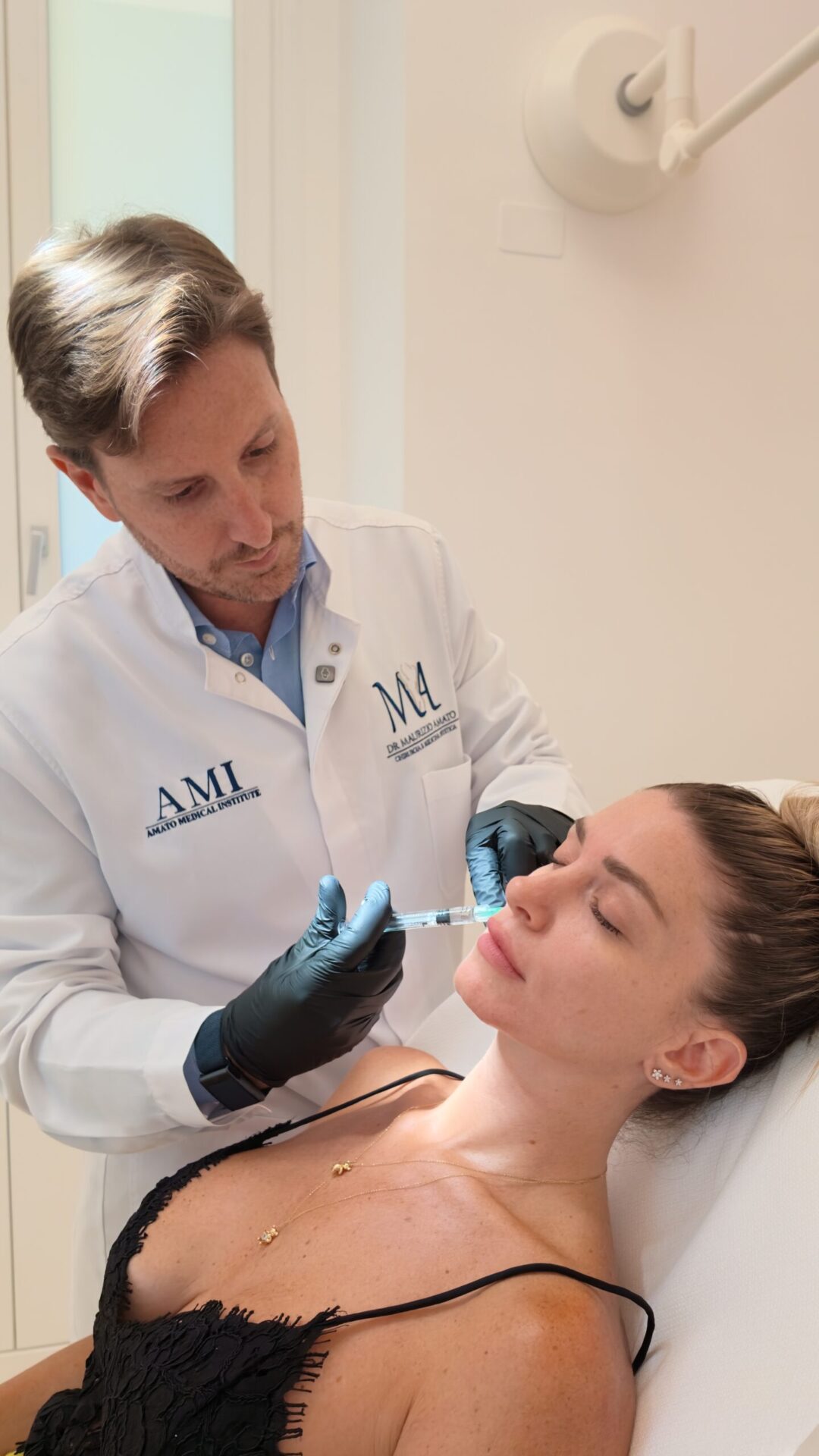
Aesthetic medicine: treatments also recommended during the summer
Injection procedures do not cause clinically significant photosensitization and, if performed correctly, can also be performed during the summer months.
Among the most recommended treatments we find:
- Botulinum toxin for the treatment of expression lines;
- Hyaluronic acid-based fillers for restoring volume and improving skin hydration;
- Skin Booster;
- Biostimulation with calcium hydroxyapatite;
- Biostimulation with polylactic acid;
- Aesthetic medicine treatments for the face, neck, décolleté, and hands.
However, it is advisable to avoid intense sun exposure in the 24-48 hours following the procedure and to use a broad-spectrum sunscreen daily.
⸻
Regenerative medicine: promoting biological tissue repair processes
Regenerative medicine is one of the pillars of modern aesthetic medicine, as it affects the biological quality of tissues by stimulating natural cellular regeneration mechanisms.
During the summer, specific protocols can be carried out such as:
* PRP (Platelet Rich Plasma);
* Polynucleotides;
* Exosomes;
* Ozone therapy;
* Personalized IV Therapy;
* NAD+.
These treatments help improve hydration, elasticity, and skin quality, counteracting the effects of oxidative stress and dehydration frequently associated with the summer season.
⸻
Chemical peels: not all are contraindicated in summer
One of the most common myths concerns chemical peels. In reality, not all peels increase skin photosensitivity.
There are superficial peels and specific formulations that can be performed even during the summer, provided that the patient is properly selected and strictly follows the post-treatment instructions.
These protocols are indicated for:
* improve skin brightness;
* refine skin texture;
* control excess sebum;
* treat surface imperfections;
* maintain even, healthy-looking skin.
Daily use of SPF 50+ sunscreen remains an integral part of the treatment protocol.
⸻
Which treatments are best postponed?
Laser procedures, particularly ablative and resurfacing ones, involve direct interaction with the epidermis and require a period of limited exposure to ultraviolet rays.
For this reason they are generally scheduled in the autumn season:
* Fractional CO₂ laser;
* Laser resurfacing;
* Laser for the treatment of dischromia;
* Laser photorejuvenation;
* Ablative procedures.
Performing these treatments during the months with less solar radiation helps reduce the risk of post-inflammatory hyperpigmentation and optimize the healing process.


